On this page
Somebody needed what you sell. They looked you up, they picked up the phone, and they rang. That is the hardest part of marketing — the part everything else exists to produce — and it already happened. Then nobody answered, and within about ninety seconds they were talking to somebody else.
Most advice about missed calls treats this as a telephony problem: cover the hours, forward the line, get the answer rate up. That is worth doing, and how AI can answer your business calls 24/7 covers it properly. This article is about the other half — what happens to the lead, which leaks in more places than the ring-out, and which is still being lost by businesses whose phones are answered every time.
The short version
A missed call is not one event, it is a leak with seven stages, and only two of them are the phone ringing out. Voicemail, a callback that goes to their voicemail, an answered call where nobody wrote down why they rang, and a captured lead nobody followed up all lose the same customer just as completely. The point of AI here is not to answer the phone. It is to make sure the enquiry survives the call.
A missed call is a customer choosing again
The reason a missed call costs more than it looks is that the caller does not experience it as a missed call. They experience it as a small answer to a question they were already asking: is this the right company to deal with? When nobody picks up, they get an answer, and it is not the one you want.
They also do not stop needing the thing. They go back to the search results and ring the next one — and the next business is now having the conversation you paid to create. Every pound and hour that went into being findable, credible and worth ringing was spent, and then handed to a competitor at the last step.
This is why phone enquiries deserve to be treated as the highest-intent lead source you have. Somebody who fills in a form is considering you. Somebody who rings is trying to transact. Salesforce Research, in the sixth edition of its State of the Connected Customer study of 14,300 consumers and business buyers globally, reports that 80% of customers say the experience a company provides is as important as its products and services — the page does not state fielding dates, so treat it as directional. For a first-time caller, the experience is whether the phone got answered, because it is the only part of your company they have met.
Where the lead actually leaks
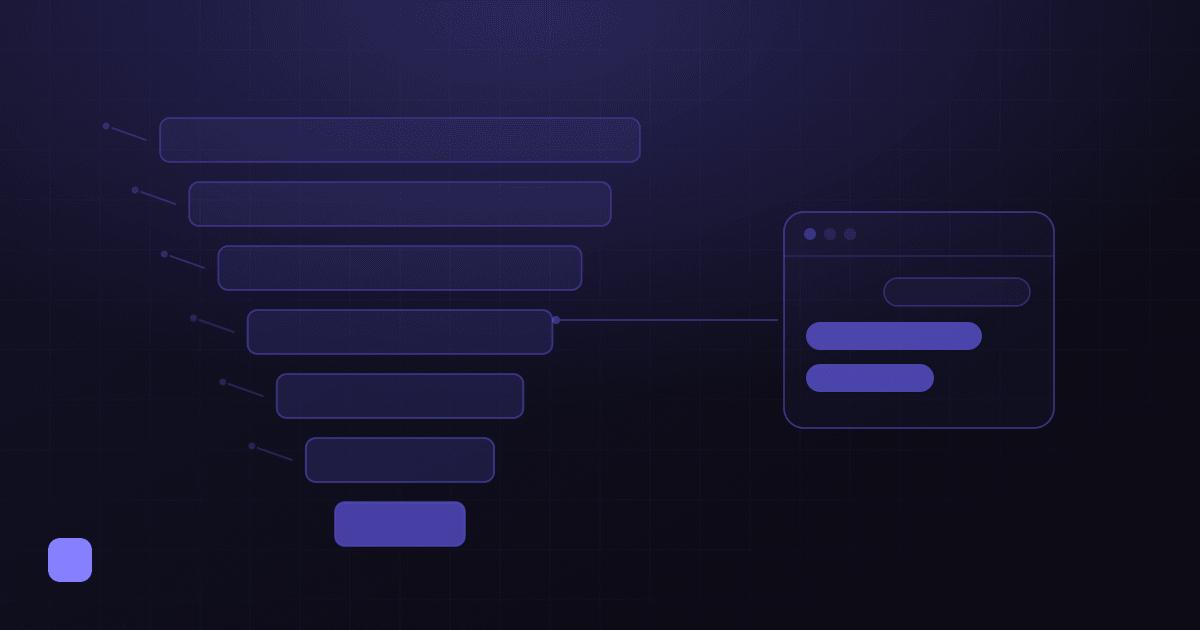
"We miss some calls" is too coarse to act on. Trace one enquiry from the moment somebody decides to ring, and there are seven distinct places the opportunity can disappear — most of which never show up as a missed call anywhere.
Stage two is the one everybody means by "missed calls", and it is genuinely a coverage problem — the four gaps behind it, and how forwarding is configured to close them, are laid out in how AI can answer your business calls 24/7. The other six are not coverage problems at all, which is why businesses that fix their answer rate are often disappointed by what happens to their pipeline.
Find your own worst stage before you buy anything
These seven do not leak evenly, and which one is largest differs by business. A trades business usually bleeds at stages two and three; a busy clinic that answers everything often bleeds at six and seven. Working out which is yours costs an afternoon and changes what you should buy — the last section of this article is how to do it.
Your answer rate is probably flattering you
Before you measure anything, one detail about phone reporting is worth knowing, because it quietly inflates the number most owners quote.
In Twilio's voice API documentation — the plumbing under a great many business phone systems — a call marked completed means this: "A completed call indicates that a connection was established, and audio data was transferred. This can occur when a call is answered by a person, an IVR phone tree menu, or even a voicemail. Completed calls, regardless of the outcome, are charged against your project balance."
Read that again with your own dashboard in mind. A call that rang, went to voicemail, and ended with the caller hanging up in silence is a completed call. It is billed as a completed call. And in a lot of summary reporting it is counted alongside the calls where somebody actually spoke to a customer. Only no-answer — "There was no answer or the call was rejected" — reads unambiguously as a missed call, and stage three of the leak above frequently is not in it.
Ask for three numbers, not one
Not "how many calls did we get". Ask your phone provider or VoIP dashboard for: calls that rang out with no answer; calls that reached voicemail; and of those, how many left a message. The gap between the second and third numbers is the one that tends to shock people, and it is invisible in every summary report that only shows answered versus received.
One piece of advice to ignore while you are looking. A great deal of writing on this topic still tells small businesses to check missed calls in Google Business Profile. That feature is gone — Google's own help page states that "the chat and call history features are no longer available in your Business Profile," discontinued on 31 July 2024. The numbers have to come from your phone system now.
Why the usual fixes do not fix it
Every business has already tried something. It is worth being precise about why each one leaves the leak open, because the answer determines what would actually close it.
The pattern is that every one of these converts an enquiry into a task for somebody to do later — return the call, read the message, chase the reply. Later is where leads die. The only fix that changes the shape of the problem is one that completes the enquiry while the caller is still on the phone.
What has to happen for the enquiry to survive
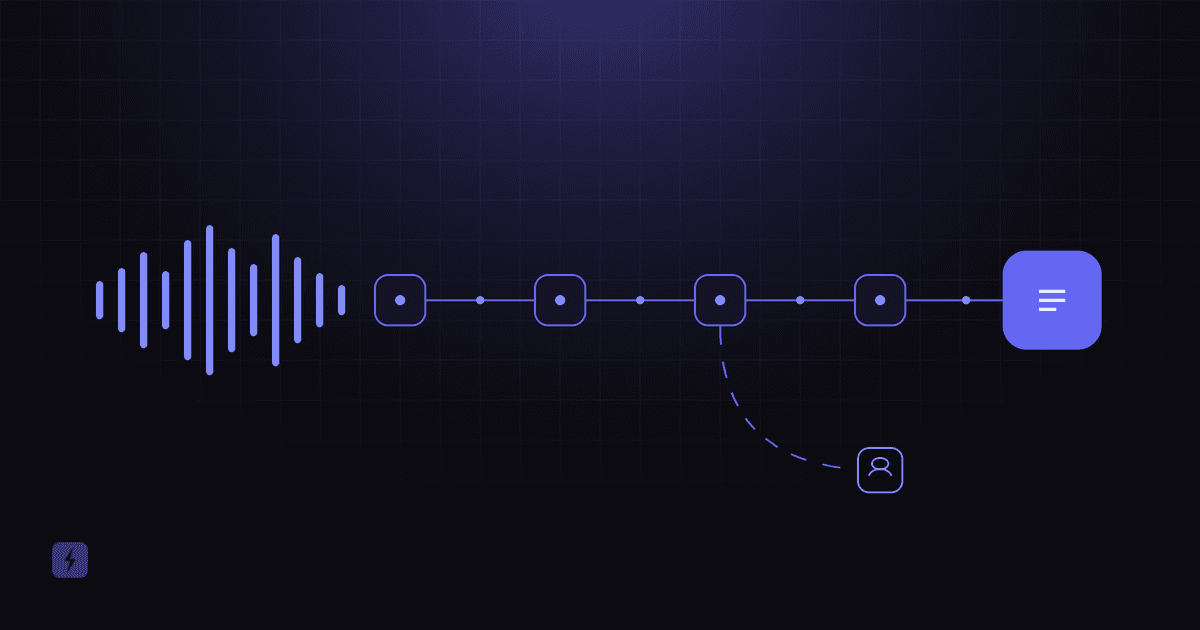
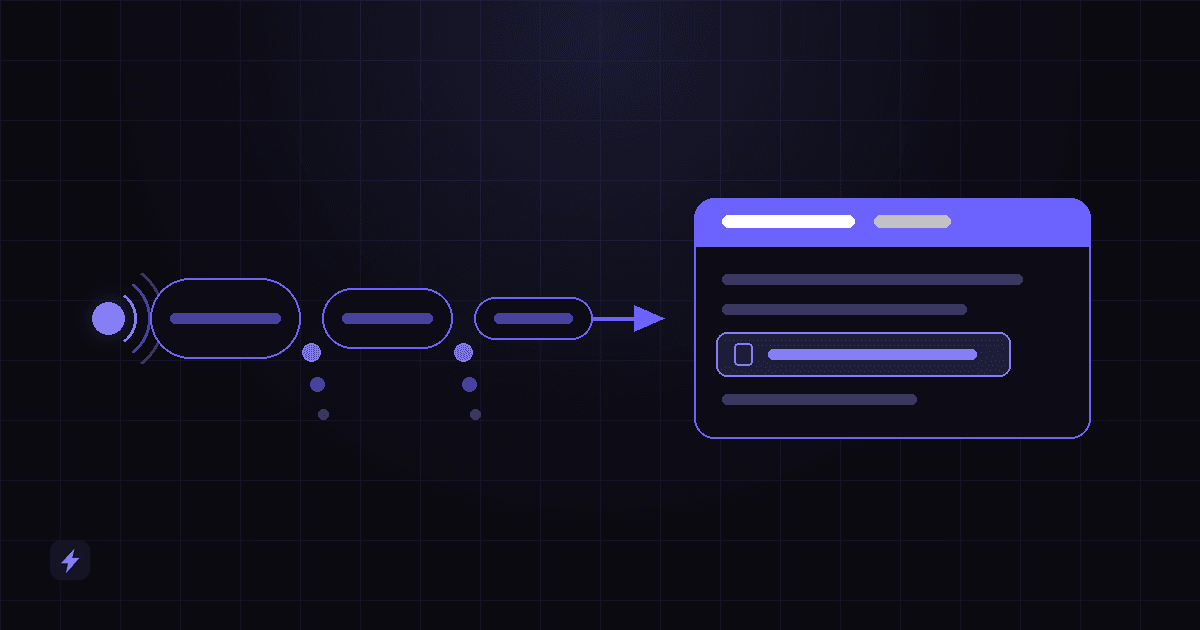
That sets a bar, and it is a higher bar than "answers the phone". For the lead to survive the call, seven things have to happen in one continuous motion — which is what an AI voice agent is actually for.
Incoming call
Answered in seconds, on the first call and the second one at the same time, at 9pm and on a Sunday. No queue, no hold music, no recording.
AI answers
A conversation rather than a menu. The caller says why they rang in their own words instead of pressing 2 for sales.
Understands intent
New enquiry, existing customer, supplier, or a question the business answers twenty times a week. What happens next depends entirely on getting this right.
Qualifies
The two or three things you would have asked anyway — what they need, where they are, roughly when. Enough to know whether this is worth your time and how urgent it is.
Captures details
Name, number, and the reason for the call in the caller's own words. This is the step that closes stage six of the leak, and the one that separates a lead from a phone number.
Books the appointment
A real slot in the real calendar, while they are still on the line. Nothing after this depends on anyone remembering to do something.
Writes to the CRM
A record with the transcript attached, so the person who picks this up knows what was said without asking the customer to repeat it.
Hands to a human
Either immediately, for anything that needs a person, or as a prepared follow-up on a lead that is already qualified and booked.
That is the shape of it. What happens inside each step — and, more usefully, what goes wrong at each one — is walked through in detail in the AI voice agent call flow, which is the article to read when you are evaluating a specific build rather than deciding whether to have one.
Capturing a call is also a consent question
If the call is recorded or transcribed — and capturing the reason for the call in the caller's own words usually means one or the other — that carries legal obligations that vary by jurisdiction. Twilio's own documentation puts it plainly: "If you choose to record voice or video calls, you need to comply with certain laws and regulations, including those regarding obtaining consent to record (such as California's Invasion of Privacy Act and similar laws in other jurisdictions)," and recommends consulting your legal counsel. In practice this means a clear notice at the start of the call and a policy you can point to. Ask any provider how they handle it; a good one will already have an answer.
The handoff is where the money is
Here is the part that gets skipped, and it is the part that decides whether any of this turns into revenue. An AI voice agent does not close anything. Its job ends at a record: a qualified enquiry, a booked slot, and a transcript. A person still does the work of winning the customer.
Which means the follow-up has to be designed as deliberately as the call, and it usually is not. Three failures are common enough to name:
- Nobody prepared, because the machine booked it. A booking that arrives without a human touching it can arrive without a human reading it either. The person turns up to the appointment cold, and the caller — who explained everything at 9pm on Tuesday — has to explain it again.
- The record lands somewhere nobody looks. A CRM entry created at 2am is only useful if it appears in whatever the team actually opens in the morning. A daily digest of overnight enquiries is a five-minute build and it is often the difference between the system working and not.
- Nothing distinguishes urgent from routine. If the agent has qualified the call, that qualification should reach the follow-up. "Boiler leaking, no heating" and "asking about prices for next spring" should not arrive as identical rows.
The other half of the handoff is escalation during the call — the caller who wants a person and should get one without arguing. It is worth designing for, and callers respond to it: in Salesforce's seventh-edition State of the AI Connected Customer study of 15,015 consumers, fielded 16 July to 16 August 2024 by YouGov across 18 countries, 45% are more likely to use an AI agent if there's a clear escalation path. Being able to reach a person is not a fallback that undermines the system; it is part of what makes people willing to use it. Where the line should sit is covered in the call flow article.
What a recovered call is worth to you
There is no industry figure for this, and anyone quoting you one has made it up or borrowed it from a business unlike yours. The arithmetic is simple enough to do with your own numbers, which is the only version worth having.
The calculation, in one line
Calls that never reached a person in a month × the share of your answered enquiries that become customers × your average customer value = the monthly opportunity. Then knock it down: an AI agent will not convert every recovered call, and some of those callers would have rung back anyway. What is left is what you are deciding about.
Two honest adjustments matter more than precision. Some callers who go unanswered do ring back — you are recovering the ones who would not have, and you cannot know that split in advance, so be conservative. And a first booking is often not the whole value; if your customers come back, the number to use is what a customer is worth over their life with you, not one job.
Build the baseline before you buy rather than after, because a number produced afterwards is a number nobody can check. How to measure AI ROI covers constructing that baseline properly, the call flow article has a voice-specific version of the method, and what AI voice agents cost has the other side of the equation.
When this is the wrong thing to buy
Four situations where an AI voice agent is not the answer, and saying so is more useful than a longer list of benefits.
- You barely miss any calls. If the phone is answered by a person nearly every time and your leak is at stage six or seven, your problem is capture and follow-up discipline, not coverage. A shared enquiry log and a rule about who owns new leads would fix more, faster, for nothing.
- The call is the service. Where the conversation itself is the expertise being sold — advice, diagnosis, negotiation — an agent that qualifies and books is useful and an agent that attempts the substance is not.
- Regulated or high-stakes advice. Anything where a wrong answer creates liability belongs with a person, with the agent limited to taking the enquiry and routing it.
- Your callers are almost all existing customers with account-specific questions. That is a support problem needing system access, not a lead capture problem. It can be worth doing, but the business case is different and the build is bigger.
There is also a scope discipline worth borrowing from every rollout that went well: start narrow. An agent that handles new enquiries reliably earns the right to be given more. One that attempts every call type on day one usually gets switched off in week three. The complete guide to AI voice agents for small business covers what a sensible first scope looks like.
How to find out in a week
Five steps, none of which require buying anything, and at the end you will know both the size of your leak and which stage it is at.
Pull one month of call records
From your phone system or VoIP dashboard, not from memory. Ask specifically for calls that rang out, calls that reached voicemail, and messages actually left.
Split them by when they arrived
Inside hours or outside, and whether another call was already in progress. This separates a coverage problem from a capacity problem, and they have different fixes.
Check what happened to the ones you did answer
Take twenty answered calls from last month and see how many produced a record with a name, a number and a reason. This is stage six, and it is usually the surprise.
Follow ten captured leads forward
How long until somebody contacted them, and how many were contacted at all? Stage seven is invisible until you look at it deliberately.
Fix the largest stage first, with the cheapest thing that works
If it is stage two, coverage is the answer. If it is six or seven, a voice agent that captures and writes to a CRM is — and if it is stage seven alone, the fix might be a rule and a shared inbox rather than software at all.
Frequently asked questions
Will callers know they are talking to AI?
Many will, and it matters less than owners expect — what callers react badly to is being trapped. Being told clearly what they are speaking to, and being able to reach a person on request, is what keeps the experience acceptable. Salesforce's research on AI agents found that a clear escalation path makes people more willing to use one, not less.
Do we have to change our phone number?
No. The usual arrangement forwards your existing number under conditions you set — after a number of rings, when the line is busy, or outside your hours — so the number on your website, your van and your Google listing stays exactly as it is. The forwarding configurations are covered in the 24/7 answering article.
Isn't a missed call just a caller who will ring back?
Some do. That is precisely why the honest version of the business case discounts the opportunity rather than counting every unanswered call as a lost customer. What you are recovering is the callers who would not have rung back — and you cannot tell which is which in advance, so it pays to be conservative in the arithmetic and let the actual result argue for itself.
We answer nearly every call. Is there anything here for us?
Possibly more than for a business that misses calls, because your leak is further down and less visible. Take twenty answered calls from last month and check how many produced a record with a name, a number and a reason for the call. If the answer is not most of them, you have a capture problem that a perfect answer rate has been hiding.
Can it actually book into our calendar, or just take a message?
Booking a real slot in a real calendar during the call is the thing that distinguishes this from a message-taking service, and it is the specific capability to test in a demo rather than take on trust. A system that only captures details has moved the work rather than removed it.
What about calls it cannot handle?
Those should reach a person, and the route should be obvious to the caller rather than something they have to fight for. A well-scoped agent handles a defined set of call types well and hands over the rest immediately — that is the design working, not failing.
Where to start
The reframe is the useful part, so it is worth restating: you are not buying phone answering, you are closing a leak in the highest-intent lead source you have. That means finding out which of the seven stages is costing you most before deciding what to buy — and for a good number of businesses the honest answer will be that the biggest leak is at capture or follow-up, which is cheaper to fix than they feared.
When coverage genuinely is the gap, Flasin builds AI voice agents that answer, qualify, book and write the record, with a clear route to a person throughout. How AI can answer your business calls 24/7 is the operational detail, the call flow is what happens on the call itself, and the AI glossary defines the vocabulary a vendor will use at you.
Sources
The call-status definitions and the recording-consent guidance were read from Twilio's own documentation on 5 September 2026 — the Voice API call resource and TwiML Voice: Record — and are quoted verbatim where they appear. The discontinuation of Google Business Profile call history is stated on Google's own help page. The 80% experience figure is Salesforce Research's State of the Connected Customer, sixth edition, 14,300 consumers and business buyers globally, with no fielding dates given on the page; the 45% escalation figure is the seventh-edition State of the AI Connected Customer, 15,015 consumers fielded 16 July to 16 August 2024 by YouGov across 18 countries.
Two figures you will see in almost every other article on this subject are deliberately absent. The claim that responding within five minutes makes a lead many times more likely to qualify traces to a source that cannot be read directly, and every accessible version cites another marketing article. The claim that some specific percentage of callers never leave a voicemail has no primary source at all — the percentage varies between articles, which is the tell. There are no missed-call costs, recovery rates, booking rates or prices in this article, because none could be verified for the claims being made; the arithmetic is left as a formula for your own numbers instead.